
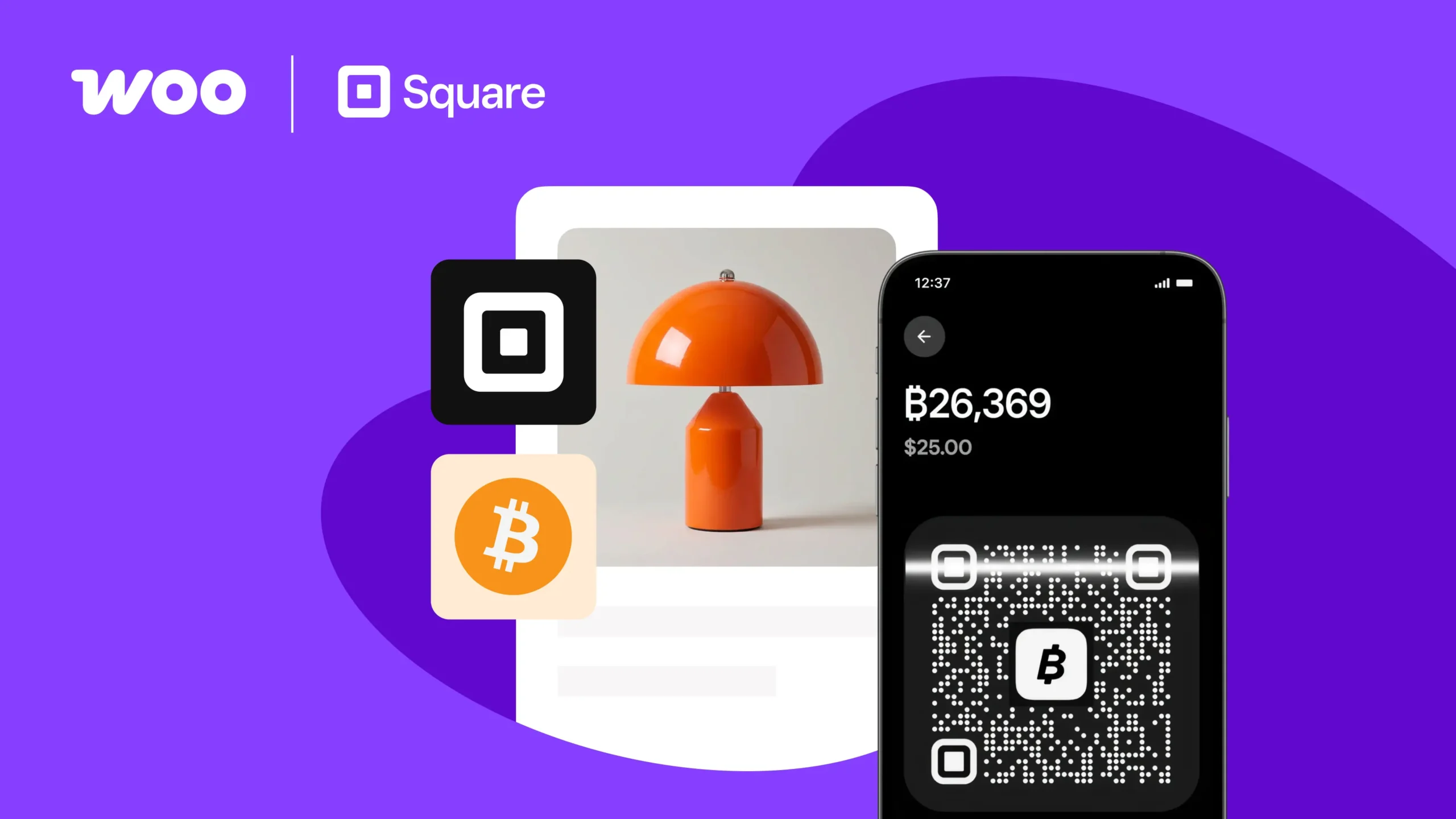
Square just opened the floodgates to Bitcoin. Here’s why it’s important for your business.
In November 2025, something remarkable happened quietly: Square made bitcoin payments available to authorized US merchants. Your neighborhood coffee shop can now accept bitcoins as easily as they go through your credit card. Payments are confirmed in seconds via the Lightning Network. There are no chargebacks. And it costs merchants nothing until 2026.
This is not a cryptographic experiment. It’s Jack Dorsey’s Block betting company that bitcoins belong at the point of sale, powered by the Lightning Network and integrated directly into hardware already used by millions of businesses.
But seeing it as just another payment option misses the bigger story. Square’s move sits at the intersection of several shifts reshaping commerce: the rise of digital wallets, the emergence of alternative payment rails, and the practical question of whether 2-3% credit card processing fees on every transaction are really inevitable.
The option of paying with bitcoins is clear. As Miles Suter, Head of Bitcoin Products at Block, said, “When a coffee shop or retail store can accept Bitcoin payments through Square, they have immediate access to funds and can keep more of their revenue by avoiding credit card fees and chargebacks.”
Accepting bitcoins at checkout works through the Lightning Network, a protocol built on top of bitcoins, enabling near-instant and low-cost transactions. Customers scan the QR code, payment is confirmed in seconds, and merchants can choose to pay in BTC or instantly convert to US dollars. Square handles all the backend complexity, including real-time exchange rate calculations, confirmation notifications, and settlement options.
Bitcoin payments are free until 2026, with a flat 1% transaction fee starting in 2027. The refund process is via digital gift cards for the USD equivalent.
Square is also introducing Bitcoin conversions, which allow merchants to automatically convert a percentage of their daily card sales into Bitcoin. Bitcoin transfers are optional and designed to help businesses that choose to manage a portion of their revenue in BTC. Square does not provide financial or investment advice.
Accepting Bitcoin transactions offers a number of practical benefits, including:
1. Near-instant or flexible settlements
Credit card payments appears immediately for consumers, but marketers know better. The actual settlement – when the funds arrive in your bank account – takes several days. And during this period, the transaction can be canceled through chargeback.
Flash transactions confirm in seconds, not the days it takes for credit card funds to actually hit your account. If you negotiate USD immediately, Lightning payment is almost instantaneous, but the last mile to USD at your bank still depends on traditional rails. But if you keep some portion in BTC – for the cash register or for the paying suppliers who accept them – that value is liquid and usable the moment the customer leaves.
2. Lower fees
Credit card processing fees typically range from 1.5% to 3.5% per transaction, with smaller businesses paying toward the higher end.
If you process $10,000 per month in card transactions, you only pay $150 to $350 in processing fees. That’s before monthly minimums, chargeback fees and equipment costs.
Square’s Bitcoin offering – Bitcoin payments are free until 2026 – represents real savings. Not transformative for every business, but for margin-conscious operations, an alternative option that may be attractive to some businesses.
3. Flexible settings
If you already use Square, enabling Bitcoin payments for your business is simple. The feature can be turned on either on the Square Dashboard or in the Point of Sale app. Currently, Bitcoin payments are only available for face-to-face transactions.
4. Global currency
For traders with international supply chains, bitcoin offers something that traditional rails do not: the same currency at both ends. If your suppliers accept BTC, you can accept payments from customers and pay invoices without currency conversion fees, international transfer fees or bank delays. No intermediary banks. No matching fees. Processing in minutes instead of days. For cross-border trade, this changes the math significantly.
5. Protection against billing and payment disputes
One of the biggest advantages of Bitcoin payments is the elimination of chargebacks. Because Bitcoin transactions are final and cannot be reversed or disputed, merchants avoid the operational and financial drain of fraudulent chargebacks that are common with credit cards. For Bitcoin transactions, this means no chargeback fees, no clawback weeks after the sale, and no time spent resolving disputes.
Cashbacks on Bitcoin purchases can still be offered, but they are issued as USD equivalent Square gift cards – giving merchants protection and in return for your customer experience.
Here’s a trend that matters regardless of your crypto stance: digital wallets are becoming how people pay.
By mid-2025, 65% of US adults use a digital wallet, up from 57% in 2024. The value of digital wallet transactions will reach $10 trillion globally in 2024. But the generation gap is stark: 69% of Gen Z adults have adopted mobile wallets, compared to 27% of Baby Boomers.
A number that should catch your eye: 51% of consumers won’t shop at stores that don’t accept digital wallets. For Generation Z, this rises to 78%.
Apple Pay, Google Pay, PayPal, Cash App – these are no longer optional. They are table stakes. And increasingly, these wallets are adding crypto capabilities. Square’s move is part of a broader convergence where the wallet is becoming a universal interface for all types of payments.
Digital wallets don’t just change as people are paying – they are starting to change WHO initiates payments.
Across the payments industry, major platforms are experimenting with AI-assisted purchasing. Google introduced the first standards for agent-initiated payments. Mastercard, Visa and PayPal have announced tools that allow artificial intelligence systems to assist in payments and transactions.
The short-term use cases are simple – helping users find and buy products faster – but the fundamental shift is meaningful.
Traditional payment systems were designed for human users: manual approvals, delayed settlements and chargebacks. Newer digital and cryptocurrency-based rails prioritize speed, programmability, and finality. These features make it easy to integrate them into automated or software-controlled payment flows.
Square has not announced plans specific to the AI-agent business. But the broader direction of the industry helps explain why companies are investing in faster and more flexible payment infrastructure. As Gartner projects greater adoption of agent-based AI across enterprise software in the coming years, payment systems that support real-time software-initiated transactions are becoming increasingly relevant.
Bitcoin at the point of sale is not about exchanging cards tomorrow. It’s about ensuring that modern business infrastructure supports the way payments can be initiated and processed in the future.
Square’s Bitcoin Triggers Signals Where Commerce Infrastructure Is Heading Digital wallets are becoming the norm. Alternative payment rails are gaining momentum. A 2-3% credit card fee is no longer the only option.
Here are some practical questions for new Woo merchants:
- Are you wallet ready? If you don’t accept Apple Pay and Google Pay, chances are you’re losing sales—especially from younger customers. This gap will widen over time as more and more consumers prefer digital wallets over traditional payment methods.
- Do you care about fees? If you have low margins or high transaction volume, alternative channels like Bitcoin (with 1% or lower fees) deserve to factor into your bottom line.
- Do you have international suppliers? If your supply chain can accept BTC, you can completely eliminate currency conversion and conversion fees.
- Are you following this space? You don’t have to accept bitcoins tomorrow. But understanding the shift and any accelerating trends will help you make better decisions as your business grows.
Today, your store probably only needs to accept credit cards and digital wallet options. But it is the infrastructure being built that will define business for the next decade.
Square sees it. Now you do too.
Get paid with Square.
Square Bitcoin payments are available to authorized Square merchants in the US, excluding New York, subject to regulatory requirements. Activate Bitcoin payments and Bitcoin conversions in the Square Dashboard or Point of Sale apps. Free until 2026, then 1% per transaction. Learn more at Square.


Dave is a visionary at the forefront of the Web3 revolution and currently leads Automattic. A native of Great Britain, Dave is now soaking up the sun and peace in Portugal. Dave shares his Web3 expertise through his consulting role at Adnode and past collaborations with WordProof, Grant for the Web and his founding business Pragmatic. He is also co-chairman of the BIMA Web3 board.